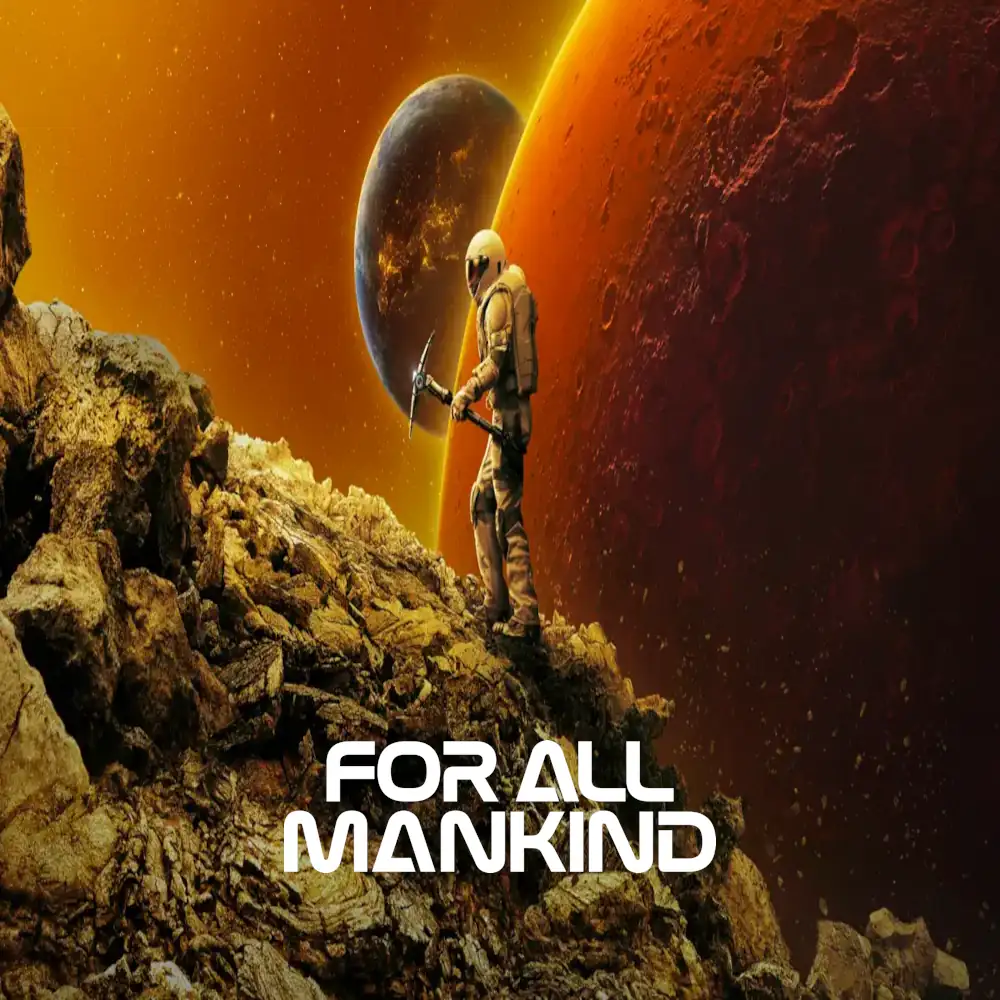
For All Mankind Season 5: The Next Giant Leap Into an Uncharted Future
As the dust settles on the dramatic events of Season 4, the passionate fanbase of Apple TV’s flagship series is already looking to the heavens with one burning question: What’s next for
For All Mankind? This groundbreaking
science fiction drama has masterfully charted an alternate history where the global space race never ended, taking viewers from a Soviet-claimed Moon to the arid plains of Mars. The upcoming season promises to be the most ambitious yet, potentially venturing into a new frontier that will redefine humanity’s place in the cosmos. While official details are carefully guarded, the narrative trajectory and the show’s core themes provide a thrilling roadmap for what
For All Mankind Season 5 might explore, pushing the boundaries of both television drama and speculative
astronomy.
The Final Frontier Awaits: A Logical Leap to the Asteroid Belt
The conclusion of Season 4 left several threads dangling, but the most significant was the establishment of a stable, though tense, human presence on Mars. The logical next step in this ever-accelerating space race is not another planet, but the rich, resource-laden Asteroid Belt. This region between Mars and Jupiter represents the next economic and strategic battleground. In the world of
For All Mankind, where the Soviet Union remains a formidable rival and private corporations like Helios wield immense power, the race to mine precious metals and water ice from asteroids is a natural progression. This shift would introduce a new era of “gold rush” capitalism in space, creating fresh conflicts and alliances that align perfectly with the show’s examination of competition and cooperation. This move would be a masterstroke for the series, allowing it to explore cutting-edge concepts in
astronomy and orbital mechanics that are currently the focus of real-world space agencies and private companies.

Image Credit: Apple TV+
The technological challenges of asteroid mining would be a central theme, pushing the show’s signature hard
science fiction aesthetic to new limits. We could see the development of advanced propulsion systems, like plasma or ion drives, to make the journey to the Belt feasible. The depiction of astronauts maneuvering and drilling into a tumbling space rock would provide unparalleled tension and visual spectacle. Furthermore, the immense wealth generated from asteroid resources could fundamentally shift the balance of power on Earth, a theme the show has touched on with Helios but could explore in much greater depth. The political and ethical questions—Who owns the resources of the solar system? How does this new wealth affect a world still grappling with Cold War ideologies?—would make for compelling drama that is both timely and thought-provoking.
Passing the Torch to a New Generation of Explorers
One of the most poignant aspects of
For All Mankind has been watching its original characters age and evolve over decades. Season 5, likely advancing into the 2010s, will undoubtedly continue this theme. Founding figures like Ed Baldwin, now a legendary but increasingly frail figure, may finally transition from frontline astronaut to a mentoring role, or his story may reach a powerful, definitive conclusion. The focus will shift even more decisively to the characters who grew up in this accelerated spacefaring era. Kelly Baldwin, now a renowned scientist, could lead the charge in the search for extraterrestrial life, a thread introduced with her discovery on Mars. Aleida Rosales, having weathered personal and professional storms, may be the one designing the next generation of ships needed to reach the asteroids.
This generational shift is more than just a narrative necessity; it’s the core thesis of the show.
For All Mankind has always been about the enduring human drive to explore, passed down from one generation to the next. The children of the Apollo era are now the leaders of the Asteroid era. This allows the series to explore new perspectives: How does growing up with a lunar base or a Martian colony as a normal part of life change a person? What new dreams do they have that their parents couldn’t even conceive of? This character work, grounded in human emotion against a backdrop of grand
astronomy and engineering, is what separates this
science fiction series from all others. Viewers can catch up on the journey so far on the
official Apple TV+ For All Mankind page.
The Evolving Landscape of Global and Corporate Politics
The geopolitical chessboard in
For All Mankind is never static. Season 4 deepened the complex relationship between NASA, the Soviet space program, and the private entity Helios. Season 5 will likely see these dynamics become even more convoluted and intriguing. With the potential for immense mineral wealth in the Asteroid Belt, the motivations of each faction will intensify. Will the end of the Cold War on Earth, a historical event the show may delay or alter, change the nature of the space race? Or will the competition simply transform into a three-way corporate-nationalist struggle for resources?
- Helios’s Endgame: Dev Ayesa’s vision for Helios has always been ambitious. Control over asteroid resources could make his company more powerful than any nation on Earth, raising profound questions about governance and sovereignty in space.
- A Shifting USSR: The Soviet Union in this timeline has remained a technological peer. Internal pressures and the changing global economy could force new, unexpected alliances, perhaps even a partnership with Helios against a common foe.
- New Players: It’s plausible that other nations, like a unified Europe or China, could finally enter the fray as major independent players, further complicating the political landscape of the solar system.
This political maneuvering is a hallmark of the series, providing a realistic and gritty backdrop to the awe-inspiring
astronomy and exploration. The show brilliantly demonstrates that reaching the stars doesn’t solve humanity’s earthly problems; it simply provides a new, zero-gravity arena in which to play them out. The writing in this
science fiction saga consistently finds the perfect balance between human-scale drama and epic, world-altering events.
Grounding the Science: The Real Astronomy Behind the Fiction
What has always set
For All Mankind apart is its steadfast commitment to scientific plausibility. The show’s depiction of asteroid mining isn’t just wild speculation; it’s based on real concepts being developed today. Companies like Planetary Resources (now defunct but pioneering) and initiatives within NASA have seriously studied the feasibility of extracting resources from near-Earth objects. These asteroids contain water, which can be split into hydrogen and oxygen for rocket fuel, and precious metals like platinum, which are rare on Earth’s surface. The series has a unique opportunity to educate its audience on these advanced
astronomy and engineering concepts while weaving them into a gripping narrative.
The challenges are immense and would form the basis of the season’s core conflicts. How do you anchor a spacecraft to a low-gravity object that may be little more than a pile of rubble? How do you process raw materials in the vacuum of space? The solutions—perhaps involving robotic swarms, mass drivers, and orbital refineries—would be a visual and intellectual treat. Furthermore, the journey itself would be a major undertaking. A mission to the Belt would take years, not months, introducing new psychological pressures on the crew. This focus on the “how” of spaceflight, the gritty, practical problems that must be solved, is what makes the
For All Mankind universe so believable and immersive. It’s a testament to the power of well-researched
science fiction to not only entertain but also inspire a deeper interest in real-world
astronomy and space exploration.

Image Credit: Apple TV+
Why For All Mankind Continues to Captivate Audiences
As it heads into a potential fifth season,
For All Mankind remains one of the most unique and compelling shows on television. Its formula of alternate history, character-driven drama, and hard science fiction is executed with remarkable consistency and intelligence. The show offers a potent blend of nostalgia for a future we once dreamed of and optimistic speculation about a future we could still achieve. It reminds us that progress is hard-won, often messy, and driven by flawed but determined individuals. In an era of television that often leans into cynicism,
For All Mankind stands as a beacon of hopeful, aspirational storytelling.
The series does more than just tell a good story; it makes viewers think. It encourages us to look up at the night sky and not just see points of light, but potential destinations. It sparks conversations about history, technology, and the path ahead for humanity. The upcoming season, with its likely focus on the next great leap into the solar system, is poised to continue this legacy. It will challenge its characters with new frontiers, both external and internal, and in doing so, will continue to captivate its audience with a powerful vision of what happens when we dare to dream for, truly, all mankind.
Frequently Asked Questions About For All Mankind Season 5
- Has Apple TV+ officially renewed For All Mankind for Season 5?
As of now, Apple TV+ has not made an official renewal announcement for Season 5. However, given the show’s critical acclaim and status as a flagship series, renewal is considered highly likely.
- What time period will Season 5 likely cover?
Based on the show’s pattern of jumping roughly a decade each season, Season 5 is expected to advance into the 2010s, exploring the next phase of space exploration in its alternate timeline.
- Which characters are expected to return for the new season?
While dependent on the story, we can expect the core characters who survived Season 4 to return, including Ed Baldwin, Danielle Poole, Kelly Baldwin, and Aleida Rosales, alongside new faces representing the next generation.
- Where is the story of Season 5 most likely to go?
The strongest narrative direction points towards the Asteroid Belt, focusing on the economic and technological race for asteroid resources, a natural progression from the established lunar and Martian bases.
- How can I watch previous seasons of the show?
All available seasons of For All Mankind are streaming exclusively on Apple TV+, which requires a subscription to access.
If you were writing the story, what would be the next “giant leap” you’d have the characters take? Would you focus on the Asteroid Belt, the moons of Jupiter, or perhaps the discovery of life? Share your predictions and hopes for the future of
For All Mankind in the comments below!