Alien Civilization: Powerful Stellar Storms Could Ignite Life on Other Worlds

The Fiery Cradle: How Powerful Stellar Storms Could Ignite Life on Other Worlds
Beyond the Goldilocks Zone: Rethinking the Habitability of Alien Worlds
Table of Contents
For decades, the search for alien life has been governed by a simple, elegant concept: the Goldilocks Zone. This is the orbital region around a star where temperatures are just right—not too hot, not too cold—for liquid water to exist on a planet’s surface. Water, we believe, is the non-negotiable ingredient for biology. But what if our cosmic recipe for life is missing a key, fiery ingredient? New research suggests we may have been overlooking one of the most violent forces in the universe as a potential catalyst for life: powerful stellar storms. While we often imagine a gentle, sun-like star nurturing a tranquil world, the reality for many planets may be far more dramatic. The very phenomena we thought would sterilize worlds could, in fact, be the spark that ignites the long and winding road toward a complex alien civilization.
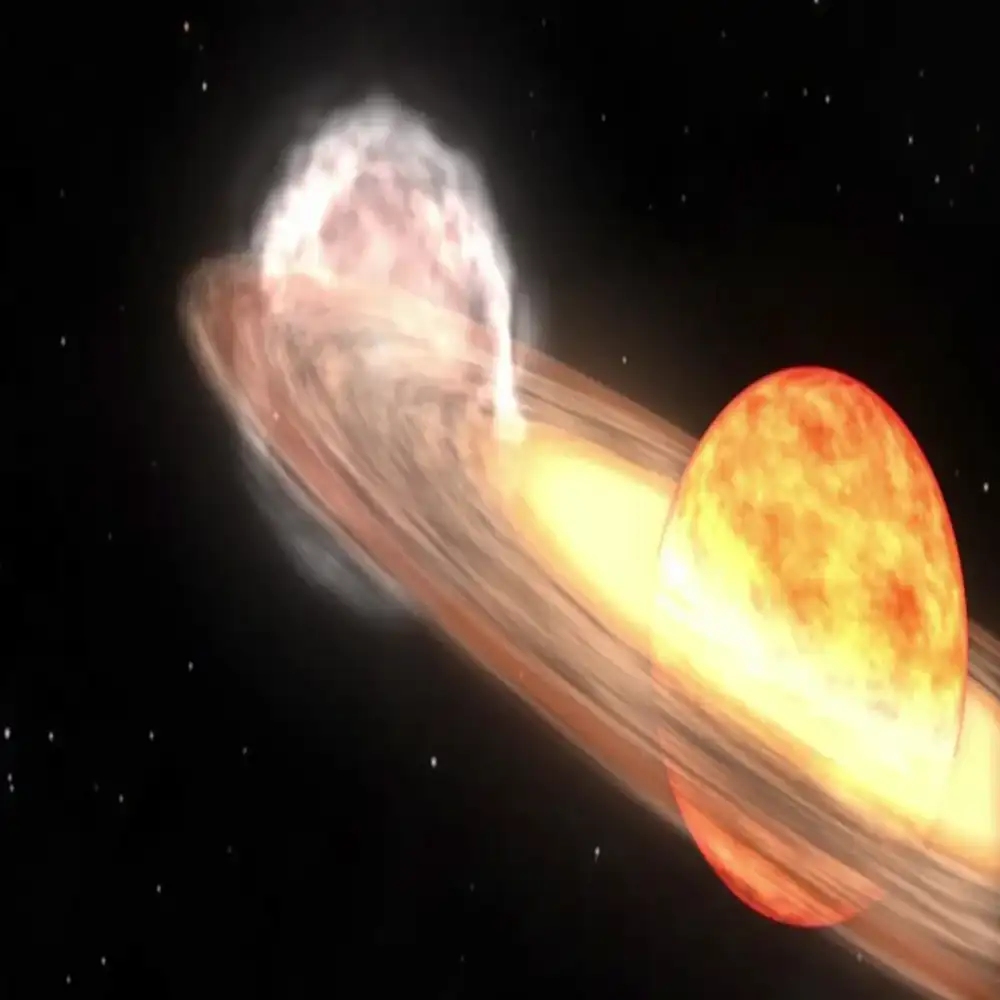
Imagine a planet not unlike Earth, but orbiting a red dwarf star. These stars are smaller, cooler, and far more common than stars like our Sun. A planet in the habitable zone of a red dwarf would be tidally locked, with one side in perpetual daylight and the other in endless night. More importantly, red dwarfs are notoriously tempestuous, frequently erupting with massive flares and coronal mass ejections that blast the planet with intense radiation and charged particles. We used to think this was a death sentence for any potential alien life. However, a paradigm shift is underway. Scientists are now exploring the provocative idea that these apocalyptic conditions might not just be survivable—they might be essential. The relentless energy input from stellar storms could provide the continuous jolt needed to drive prebiotic chemistry, the set of reactions that create the building blocks of life, on a global scale.
Image Credit: NASA
The Double-Edged Sword of Stellar Fury
To understand how destruction could lead to creation, we need to look at stellar storms not as a single event, but as a constant, shaping force. A coronal mass ejection from a star like our Sun is a spectacular event, hurling billions of tons of plasma into space. When this magnetized cloud slams into a planet, it compresses its magnetic field and atmosphere, funneling immense energy into the system. For a world with a robust magnetic field and a thick atmosphere, like Earth, this interaction creates the beautiful aurora. For a world without such protections, it can lead to atmospheric erosion, stripping away the very air and water that could support alien life. This is the first edge of the sword—the threat of sterilization.
Yet, this same energetic onslaught could be the engine of chemical complexity. The intense ultraviolet radiation from a stellar flare is a powerful source of energy that can break apart stable molecules in a planet’s atmosphere, such as carbon dioxide and molecular nitrogen. These shattered fragments are highly reactive radicals, desperate to form new bonds. This creates a primordial soup of chemical ingredients, constantly being stirred and energized. In this chaotic environment, simple molecules can be forced together to form the more complex compounds essential for biology, such as amino acids and nucleotides—the very letters in the genetic code. This process could dramatically accelerate the journey from non-life to life, making the emergence of a future alien civilization more probable than we ever thought.
Case Study: The Crucible of the Early Earth
We don’t have to look light-years away to find evidence for this theory. Our own planet provides a compelling case study. Billions of years ago, our Sun was a much more active star, with frequent and powerful flares. The early Earth’s atmosphere was very different, rich in gases like methane and ammonia. Scientists simulating these conditions in labs, like the famous Miller-Urey experiment, have shown that sparks of lightning—a stand-in for various energy sources—can produce organic molecules. But stellar flares offer a far more widespread and continuous energy source. The constant bombardment by solar storms on the early Earth could have been a primary factory for the organic building blocks that eventually led to us. It suggests that what happened here might be a common process throughout the galaxy.
This historical perspective forces us to reconsider the potential for alien life on worlds we once wrote off. A planet like Mars, which lost its global magnetic field and much of its atmosphere, serves as a cautionary tale of what happens when protective shields fail. However, an exoplanet with a strong magnetic field, orbiting an active M-dwarf star, could be in a perfect position to harness its star’s fury. The magnetic field would act as a shield, diverting the most damaging charged particles toward the poles, while the flare’s UV radiation and the energy from moderated particle collisions work their chemical magic in the atmosphere and on the surface. This delicate balance between protection and energy infusion could be the key to turning a seemingly hostile world into a cradle for biology.
Implications for the Search for an Alien Civilization
This new framework fundamentally changes how we should search for signs of alien life and even an advanced alien civilization. If we only look at placid, Sun-like stars, we might be missing the majority of potential biospheres in our galaxy. Our search for biosignatures—chemical indicators of life in a planet’s atmosphere—must now account for planets under constant stellar bombardment. For instance, the simultaneous presence of certain gases, like oxygen and methane, which normally react and destroy each other, could be a powerful biosignature. On a storm-wracked world, such an unstable combination might only be possible if life is continuously replenishing it, a clear sign of a active biosphere that could one day evolve into a complex alien civilization.
Furthermore, the concept of technosignatures—signs of advanced technology—might also need revision. Could a species that evolves under a violent star develop unique technologies to harness that very energy? An alien civilization on such a world would likely have a deep understanding of plasma physics and stellar dynamics. Our search strategies, such as those employed by projects like SETI, should perhaps prioritize listening to planets orbiting active M-dwarf stars. The potential for discovering not just life, but an intelligent alien civilization, might be higher in these dynamic and energy-rich environments than in the quieter solar systems we’ve traditionally favored.
Future Research and Observational Strategies
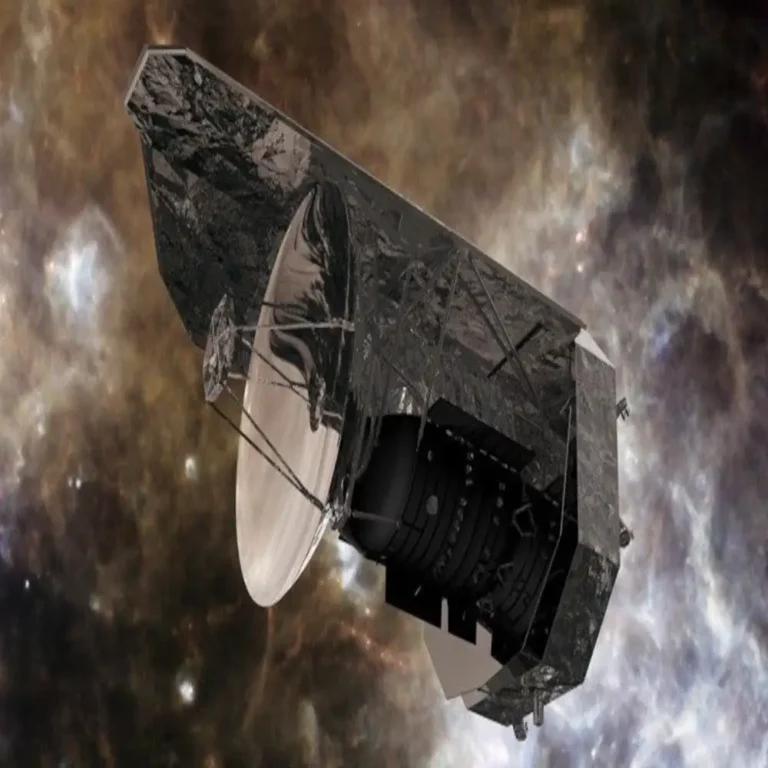
The next step in testing this thrilling hypothesis lies with a new generation of telescopes and space missions. The James Webb Space Telescope (JWST) is already capable of analyzing the atmospheres of distant exoplanets. By observing transiting planets around active red dwarfs, JWST can hunt for the chemical fingerprints of stellar storm-driven chemistry. We should look for anomalous abundances of prebiotic molecules or the tell-tale signs of gases that are quickly destroyed by UV light, indicating a constant replenishment process that could be driven by either chemistry or biology. Finding such evidence would be a monumental step in validating the idea that stellar fury can ignite life.
Closer to home, missions focused on studying our own Sun, like the Parker Solar Probe, are providing unprecedented data on how stellar winds and coronal mass ejections behave and interact with planetary environments. This knowledge is directly applicable to understanding the conditions on exoplanets. Combining solar physics with exoplanet astronomy allows us to build more accurate models of these distant worlds. As we plan future, even more powerful telescopes, such as the Habitable Worlds Observatory concept, we must ensure they are designed to characterize planets around a diverse range of stars, especially the tempestuous red dwarfs that make up the majority of stars in our Milky Way.
Conclusion: A New Cosmic Perspective on Life
The revelation that powerful stellar storms could be the midwives of life is a profound shift in our cosmic perspective. It expands the habitable landscape of our galaxy from a few quiet oases around Sun-like stars to a vast number of stormy, energy-rich worlds. The path to alien life and perhaps even a widespread alien civilization may not be a calm, gentle journey, but a turbulent voyage forged in cosmic fire. It reminds us that life is not a delicate flower, but a tenacious force that can potentially arise in the most unexpected and violent corners of the universe. As we continue to scan the heavens, we must now listen for the whispers of biology not just in the quiet places, but amidst the stellar storms.
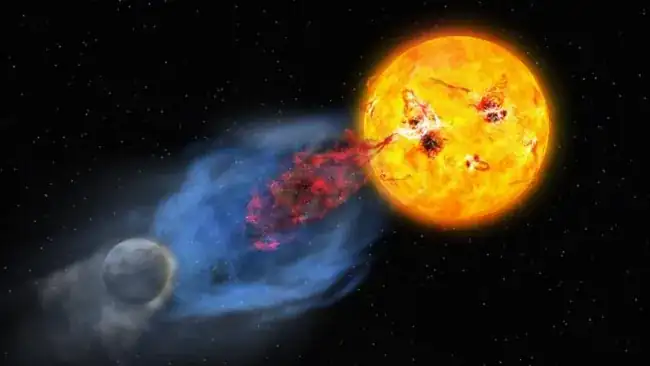
Image Credit: NASA
Frequently Asked Questions (FAQ)
- Could a planet survive constant stellar flares long enough for life to begin? Yes, if it has a strong magnetic field and a thick atmosphere. The magnetic field deflects the most damaging charged particles, and the atmosphere absorbs harmful UV radiation, potentially allowing surface chemistry to proceed.
- What are the best real-world examples of this process? The early Earth itself is the prime example. Our young Sun was more active, and its storms likely contributed to the prebiotic chemistry that led to life. Jupiter’s moon Io shows how tidal forces (another energy source) can drive extreme geological activity.
- How does this change the way we search for alien life? It directs our attention to planets around red dwarf stars, which are the most common type of star. We now need to look for biosignatures that are resilient to or even produced by flare activity.
- Would life on such a world be fundamentally different? It might be. Life there could have sophisticated DNA repair mechanisms, live underground or underwater for protection, and might even use the radiation or the chemical byproducts of the flares as an energy source.
- What is the biggest challenge for life on these worlds? The biggest challenge is atmospheric retention. Without a strong magnetic field, a planet’s atmosphere can be stripped away over billions of years by the relentless stellar wind, as may have happened on Mars.
What are your thoughts? Do you believe the most common form of life in the universe might be thriving on worlds we once considered hellish? Share your ideas in the comments below!
sources:
- https://www.nasa.gov/
- https://www.nasa.gov/centers-and-facilities/marshall/nasa-global-astronomers-await-rare-nova-explosion/
- https://www.space.com/space-exploration/search-for-life/powerful-solar-storms-may-help-life-get-going-on-alien-planets-heres-how